
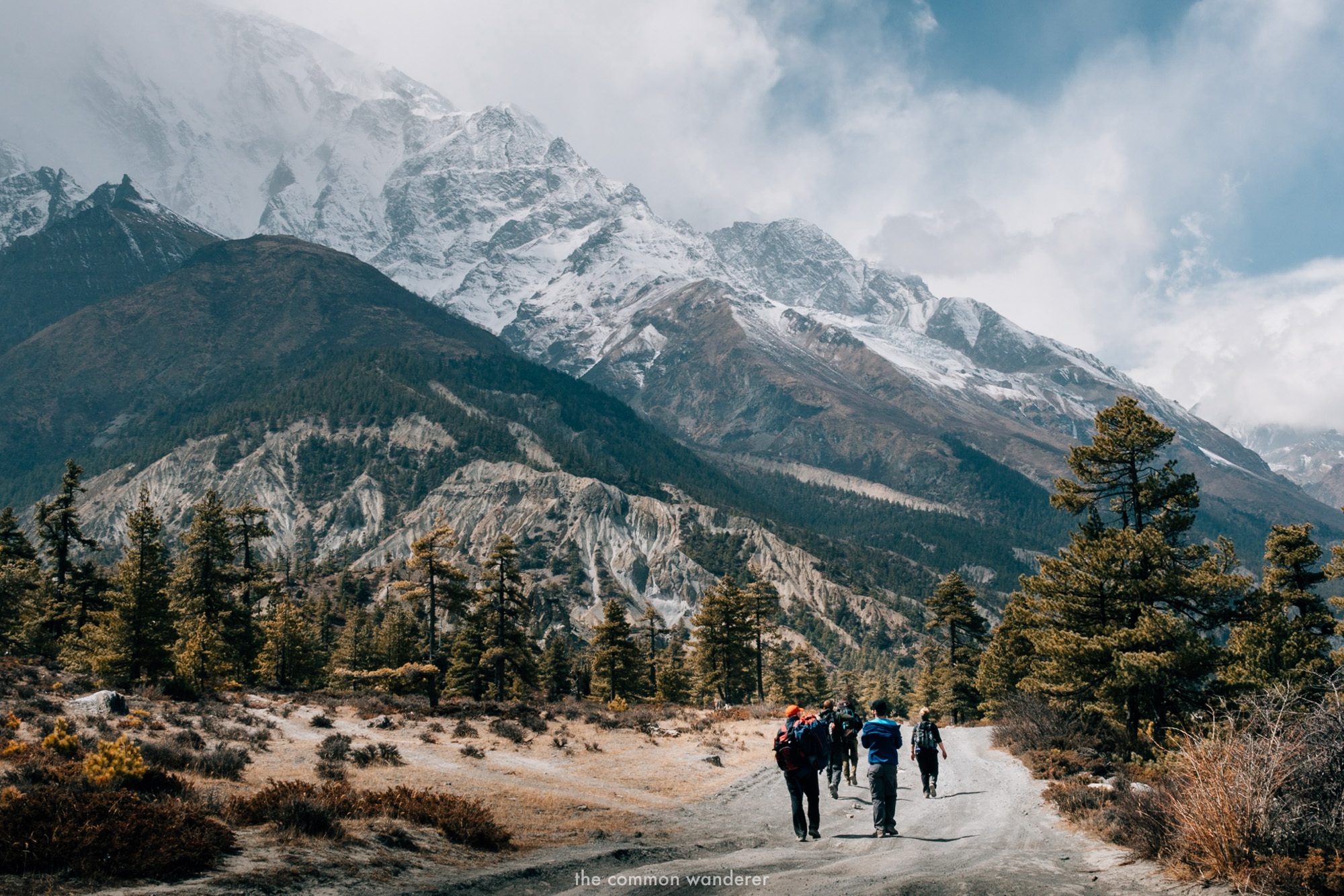
The Trek Nepal Annapurna Circuit is one of the world’s greatest trekking routes and passes through a wide range of climates, vegetation and cultures with a range of altitudes traversed from 800m/ 2,624ft to 5416m/ 17769ft The Annapurna Circuit Trek showcases the natural beauty of Nepal, from the subtropical vegetation of the Marshyangdi Valley to the high, arid Manang region around the Thorong La Pass. But perhaps the question that is uppermost in everyone’s mind as they consider possible treks is: just how fit do you need to get?
Fitness is a consideration and challenge when hiking the Annapurna Circuit, but you don’t need to be in elite sports condition or a marathon runner type. All sorts of people with all sorts of lives manage to make the trek every year. You don’t need to be a marathoner or a professional hiker, but you should be reasonably active, accustomed to being on your feet for long stretches for days on end, and ready to tackle the specific hurdles of high-altitude hiking. It’s not a particularly challenging hike; there is no climbing or scrambling involved for most of the way. The time, elevation, and fickle weather are what make it difficult.
A standard Annapurna Circuit trek usually spans between 12-20 days, including both trekking days and side trips. At the same time, you’ll be spending five to eight hours a day walking, most days; a bit more sometimes, and over several kinds of terrain — stone steps, forest paths, rocky trails and, at times, stretches of snow, especially near the high mountain pass known as Thorong La, which is 5,416 meters high, or 17,769 feet. Elevation is a big one that can hit the toughest hikers. When you go higher, the concentration of oxygen gets lower, making everything that much harder. There’s a reason good cardiovascular endurance and pacing are so important. The fitter you are, the more energy you will have to enjoy rather than merely endure the experience.
That being said, most people do ease themselves into trekking the Annapurna Circuit. Walking or hiking regularly, preferably with a backpack, and ideally on hilly terrain, is excellent training. Strength training for your legs and core is also beneficial, as well as aerobic exercise such as running, swimming, or biking. But physical fitness isn’t all there is. Mental toughness is huge. Conditions can shift suddenly, minor discomforts can arise — cold showers, basic toilets — and even the fittest of the fit can fall victim to altitude sickness. It’s just as important in many ways to be adaptable and resilient as it is to be physically prepared.
The trek is easier if a guide or porter accompanies you. Not having a heavy pack to carry helps you save energy and spare your knees and back. Acclimating, too, is key. Walking gradually up with day rests in a well-planned itinerary helps your body to get used to thinner air, which means your treks are a lot safer and pleasurable.
Ultimately, you must be in good enough shape to hike for hours each day, cover thousands of meters of vertical gain and descent, and withstand the impacts of altitude and changing weather. But you don’t have to be a professional. through preparation and pacing, and way on a positive attitude attractive numerous novice trekkers do the circuit. The point is, how fit you are today is not the issue, but how prepared you are willing to get is. The lessons from this trek can be summed up by saying that people with the correct attitude and preparation can achieve what they want to do, and that includes the Annapurna Circuit. And the views? Worth every step.
Introduction to the Annapurna Circuit hike
The Annapurna Circuit Trek Map is one of Nepal’s, if not the world’s, greatest trek routes, a combination of stunning natural beauty, cultural diversity, and its physical challenge. Running somewhere between 100-145 miles, depending on the start and finish, the route circles the Annapurna Massif, traversing an array of landscapes — from dense subtropical forests and ancient rice terraces to high alpine zones and dry desert-like cliffs. One of the trek’s most celebrated moments is the exit through Thorong La Pass, the highest point of the trek at 5,416 meters (17,769 feet), which presents stunning views and the satisfaction of a well-trekked trip. En route, we will pass through traditional villages and Buddhist monasteries, and meet a variety of ethnic groups, such as Gurung, Thakali, and Manangi. The circuit can be hiked in 12 to 20 days, depending on pace and chosen route, with many side hikes and alternate trails. And it’s not only the scenery that makes the adventure so memorable, but also the passage through diverse ecosystems and cultures. Tea houses and guest lodges offer accommodations and meals, so it’s a teahouse trek, but you don’t have to camp. Annapurna Circuit is great for adventurers who are looking for a full trek in the Himalayas that is challenging but doable.
Required Fitness Level
You don’t need to be a pro-athlete to finish the Annapurna Circuit, but you do need a good level of fitness and some hiking experience. It is a demanding trek, and includes several long walking days and an ascent of over 15,000 ft. And crossing of Thorong La at a challenging altitude of 17,600 ft. Trekkers need to be able to hike 5-8 hours per day (and more in some cases) with a light to moderate pack. Those who are already regular hikers or fit people who do cardio and strength movements each week usually get into it just fine. It is doable for someone with little hiking experience, but the more prepared you are, the more incredible and less painful the trek will be. People have done the trek from teens to retirees, but they need to be in good physical shape. If you are sedentary or unaccustomed to lengthy activity, you should have at least a couple of months of steady training in preparation for the trek. This is where a mix of aerobic exercise, hiking with a pack on, and strength training will come in handy. Mental readiness and adaptability are as important as physical fitness, If not more, specifically in the face of unpredictable weather conditions and altitudinal challenges.
Cardiovascular Endurance Requirements
One of the most important things to train for the Annapurna Circuit is cardiovascular endurance. You will hike for days on end, frequently at higher than 3,000 meters, with the trek’s high point at Thorong La Pass at 5,416 meters. But at those elevations, oxygen levels are much lower, and breathing and exercise become far more challenging. A strong cardiovascular system helps your body use oxygen more effectively and reduces the burden of altitude. Heart- and lung-strengthening activities, such as running, swimming, vigorous walking, biking, or stair climbing, should be a staple of your workouts. So start your training 8-12 weeks before your trek, where you should be more focused on endurance rather than intensity. Aim for at least 60–90 minutes of continuous moderate aerobic exercise 3–5 times a week. Hiking at altitude (if possible) can be particularly beneficial. Even with good cardio fitness, you still need to climb slowly and include rest days to acclimatize properly. Remember, being cardiovascularly fit will not prevent altitude sickness, but it will reduce your fatigue and improve your capacity to recover from the day’s walk, making the trek easier and much more fun.
Strength and muscle building
Annapurna Circuit Trek Cost Strength training is an aspect of trek preparation that tends to get left behind, yet is essential to building up your body to deal with what the Annapurna Circuit will throw at it. You’re going to be climbing or descending thousands of meters over rugged, uneven ground, which creates stress for your legs, knees, hips, and core. Strong leg muscles — particularly your quads, hamstrings, calves, and glutes — are key for stability and power on a descent and an incline. A strong core is also important for balance and posture, especially with the weight of a backpack. Add in workouts such as squats , lunges, step-ups, planks, and resistance to your sweat schedule. Shoot for 2–3 strength workouts per week before the trek. If you can add in hikes with a loaded backpack, so much the better, both to get the real experience and to train your muscles to do more endurance and weight-bearing movement. Not just that, strength conditioning also boosts performance and lowers the chances of injury (especially in the joints and lower back). A stronger foundation of strength will cause less soreness, will recover better, and will feel more confident on steep or tricky sections of trail. For extended treks, such as the Annapurna Circuit, both strength and endurance will dictate how well you handle the continued physical stress that comes from back-to-back hard days in a row.
Stamina and Trekking Duration
Endurance is required – to hike the route, one generally requires 12-20 days to complete , and daily walking distance can vary between 10-25 kilometers. The hike’s no one-dayer: it involves day after day of sustained effort, with the conditions always changing and the scenery never quite the same as the day before. Develop Endurance: Progressive training designed to replicate natural trekking conditions will build your stamina. Begin with moderate hikes, work up to greater distances, elevation, and pack weight. Workouts Lasting 4–6 Hours: Training hikes that are physically and mentally tiring. Weekend hikes with rest days in between are particularly effective. Combining cardio throughout the week helps develop fitness. Nutrition and hydration are also factors—feeding yourself well in training makes sure your body learns how to function efficiently over long stretches. This stamina is your friend on the trail — it helps you keep a consistent pace up steep climbs and take off again soon after tough climbs or long descents. It also impacts your mental toughness: how much you can motivate and concentrate yourself on while you’re tired. With strong stamina, you will be less prone to hitting those physical or emotional walls that can make your journey an unpleasant one.
Altitude and Acclimatization
Altitude is one of the biggest challenges of the Short Annapurna Circuit Trek, and knowing how to acclimatize is crucial to staying safe and healthy. Once you climb beyond 2,500 meters, oxygen in the air becomes less concentrated, making it more difficult to breathe, and eventually resulting in altitude-related sickness such as Acute Mountain Sickness (AMS), High Altitude Pulmonary Edema (HAPE), or High Altitude Cerebral Edema (HACE). The 17,768-foot-high Thorong La Pass, the trek’s high point, is at a lung-busting 5,416 meters — it’s just over 50% of sea-level oxygen. This can be achieved if you ascend slowly, drink water, abstain from drinking alcohol, and build in rest or “acclimatization” days into your schedule. Being in tune with how you feel is vital — headaches, nausea, dizziness, or inability to sleep can be indicators of AMS and shouldn’t be dismissed. Some trekkers take medications like acetazolamide (Diamox) to help adjust, but it should never be regarded as a replacement for good pacing. Choose an itinerary that allows gradual acclimatization, particularly between 3000-5000m. Additional nights at places such as Manang or Yak Kharka can mean the difference between life and death. Acclimation is more than just surviving altitude — it’s about thriving in it so you can soak up the stunning views without sacrificing your health.
Grit and resilience
Mental toughness is as important as physical training, the Annapurna Circuit requires both. 14+ hours days, bad weather rolling in, the physical demands, basic amenities, high elevation, these things can get anyone down, especially if you’ve been hiking for a while. There are some big ups and downs on this trek through one of the world’s highest mountain ranges, and tackling these with mental resilience — pushing through discomfort, staying positive, and coping with unexpected obstacles — is critical to not only finishing the trek but doing so with a smile on your face. We suspect there will be points when you doubt: sore muscles hurt, cold starts, endless uphill slogs. Developing mental strength is about preparing for those hardships in advance. Train uncomfortably: hike in the rain, carry a heavy pack, or get up at dawn and walk all day. And that’s where cultivating a perspective that adversity is simply part of the journey can make a huge difference. Mindfulness, breath work, and remaining in the present moment can be automatic stabilizers for the mind. “It’s also a good idea to manage expectations — not every day will be a great day, and things won’t necessarily go the way you wanted them to,” Lee added. Accepting the uncertainty of high-altitude trekking is part of the experience. And, most of all, keep an open mind, look out for other trekkers and enjoy the experience, not just the destination. You can outlast physical energy with mental toughness.
Recommended Training Plan
A proper training schedule is necessary for developing the stamina, muscle, and mental toughness it takes to do the Annapurna Circuit. Start training at least 10–12 weeks before your departure with mild exercises and then work your way up to more intense training sessions. You’ll need to get in three to five days of cardio a week, in the form of hiking, running, biking, or even fast walking. Shoot for 45 to 90 minutes a pop. Two of them should be long hikes, preferably with a heavy backpack to simulate trekking conditions. Strength training is done 2–3 times per week, emphasizing your legs (squats, lunges, step-ups), core (planks, Russian twists), and stabilizing muscles. Don’t forget about flexibility and mobility — yoga or stretching will help avoid injuries and aid your muscles’ recovery. Add 1–2 rest or light days to your schedule per week to prevent burnout. Toward the last 2-3 weeks, taper workouts a bit to give your body some rest. They will also help you better prepare your body for the rigours of the circuit by allowing you to practice climbing and descending. Steadiness trumps intensity. Keeping up with this schedule will prepare not just your physical conditioning but also your confidence, and the hike becomes a more rewarding and doable one.
Fitness to Practice and Health
Before you make a go of the Best Time to Trek Annapurna Circuit, it would be wise to evaluate your general wellness and medical well-being. This is a challenging high-altitude trek, and people with medical issues, particularly heart, lung, or circulation conditions, should consult a doctor in advance. A complete exam, including the cardiovascular and respiratory systems, is indicated. Striding at altitude places additional stress on your heart and lungs, so it’s important to understand the limits of your body. Asthma, high blood pressure, and diabetes can be controlled with the right planning, but they, too, call for special precautions and guidance from a medical professional. Bring medication for the entire trip, plus some extras, in case of delays. Carry a good basic medical kit with items like blister treatment (I use Compeed), anti-inflammatories, electrolyte sachets, and altitude medication (acetazolamide if you are likely to be affected — remember to ask your doctor about your specific trip before taking any kind of altitude medication). Coach Class: You want trekking insurance with helicopter evacuation for your kit bag — altitude sickness has a way of hitting athletes and sloths alike. It’s a good idea as well to keep abreast of recommended vaccines for Nepal. The rigours that your body’s going to go through are enough to handle some long days, unpredictable weather, scarce medical attention, and basic accommodation. If you are medically prepared, it enables you to prevent medical setbacks and helps you enjoy the trek with full safety.
Ultimate Checklist for Your Fitness Before The Trip
Use a fitness checklist to determine if you are ready for the Annapurna Circuit Trek with Tilicho Lake as you move nearer to your departure date. Some sites can lead you to that by confirming you can walk 6-8 hours a day on steep ups and downs with a 7-10 kg pack. You should have done consecutive trekking days in training to replicate the conditions. If you’re in good cardiovascular shape, for example, you should be able to maintain a pace that allows you to chat with a friend without hyperventilating when tackling hills and not have to stop and “rest” every few miles. Your strength should also ensure good joint stability, given the fact that your knees and hips bear the brunt of the work. Make sure your gear fits well and does not make you feel restricted or uncomfortable: Test gear well in advance, such as boots, backpack, and layers. Ensure you have trained at altitude (or know your acclimatization strategies if that will not be possible). Mentally, you should be comfortable with rough days, and back-to-basics sleeping, as well as trail uncertainty. Your health status is good, with no recent injuries or illnesses. Have you trained your hydration and nutrition during your long training hikes? Did you bring some altitude meds, and what about first aid? If you can check these off, you’re not just good to go for the Annapurna Circuit — you’re good to have the time of your life. Preparation is the key to an amazing and safe adventure in the Himalayas.
How fit do you have to be for the Annapurna Circuit?
Annapurna Circuit Trek Package You must be in some form of moderate shape. This means you should be able to spend 5-8 hours a day walking, often up or down, for several days in a row. Moderate cardiovascular and leg strength are essential. You don’t have to be an athlete, but if you’re used to going on hikes regularly or are simply active and have done some training, you’ll find the trek easier and more fun.
How much training for the Annapurna Circuit?
Ideally, you should start training 8–12 weeks before your trek. 2. Shoot for 3–5 cardio sessions per week (running, biking, hiking, etc.) and 2–3 strength training sessions (focusing on legs and core). Work up to a long hike with a backpack at least once a weekend. Ramped-up training is not necessarily key; consistent, gradual training that does not demand too much, too soon is the right approach.
Can beginners do the Annapurna Circuit?
Yes, plenty of beginners make it around the Annapurna Circuit, but you have to prepare. If you’re new to trekking or multi-day hikes, you may need to train for several months. Opting for a slower itinerary with acclimatization days, hiring a guide, and taking a porter can also help first-timers feel safer and more comfortable during the trip.
How hard is the Annapurna Circuit?
The Annapurna Circuit Trek is a moderate to fairly challenging trek. The trail is not technical, but its long duration, high altitude (up to 5,416m), and daily elevation variations are physically and mentally challenging. The most challenging section is crossing Thorong La Pass, where the altitude and weather can be unpredictable. With proper preparation and pacing, it’s quite doable.


